Blog

This is where I’ll do my best to keep you posted on my research adventures.

Academic Mobility, Talks & Conferences

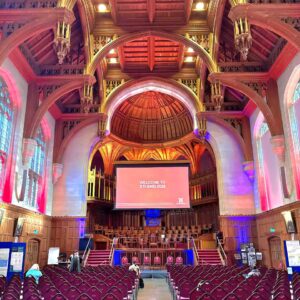
STI-ENID 2025: Bristol, baby!

Attending STI-ENID 2025 in Bristol was an inspiring experience filled with brilliant talks, meaningful conversations, and great people. I presented a collaborative study on SEO metrics for academic visibility, highlighting how different tools can yield strikingly different traffic estimates. Beyond the research, the event was a powerful reminder of the value of learning, sharing, and connecting with an international community.

Read More

A paper a day keeps the PhD awake

Science, meet YouTube: A New Path to Impact

This post explores a study analyzing how mentions of scientific articles in YouTube videos can predict their academic and societal impact. Medical and biological sciences lead the way, and subscriber count and video views play a key role.

Read More

A paper a day keeps the PhD awake

What makes a Science Video engaging on YouTube?

YouTube isn’t just for entertainment, it can be a powerful tool for science communication. A PLOS ONE study of American Chemical Society videos reveals how factors like video length, likes, and mobile viewing influence audience engagement with science on YouTube. Communicating science effectively isn’t just about the content, it’s about how it’s presented.

Read More

Academic Mobility

2025: Universitat de Barcelona

I’ve just started a new research stay at Universitat de Barcelona with Carlos Lopezosa, exploring how patents are positioned and made visible in digital environments. This adventure is the beginning of a broader journey to design new indicators that help improve the way research is shared and understood.

Read More

A paper a day keeps the PhD awake

Understanding WATA: a practical guide to Word Association Thematic Analysis

A paper a day keeps the PhD awake: Word Association Thematic Analysis (WATA) is a mixed-methods workflow that first detects statistically distinctive words between two groups of texts, then interprets them in context to develop themes—offering scalable, human-meaningful comparisons across large corpora.

Read More